

We’re not even two months into the year and I’m already so tired of hearing about how AI is going to change everything in 2026. The constant LinkedIn proclamations of doom, or wild excitement of how it will change things, are grating.
Because AI will not sweep in and alter our worlds in a single week, month or even year. It will be a drip feed of change, which is why it’s critical to stay on top of what’s happening to help you adjust strategies and learn from what the biggest publishers are doing.
There is some good news this week – I’m heartened by the rise of Substack and the fact subscriptions are alive and well for news sites. There are interesting predictions for what the primary ways of consuming content will be (spoiler: YouTube, but in a different way).
And I will admit it – there’s an interesting way that a major publisher is using AI, and if it works it’ll allow talented journalists to thrive.
Substack on the rise… again
Press Gazette has published its list of the 50 biggest English-speaking news sites. While BBC remains top, Substack has grown 44% YoY, putting it in 12th place overall and making it one of the biggest climbers, putting it above long-established news platforms such as USA Today and Reuters.
the better web co. insight:
Substack is a really interesting model in the middle of this shift in journalism and content creation. It’s created a new space for investigative journalism to live – for instance, the local title London Centric managed to stop the mass eviction of thousands of renters through its reporting. While critics might point to the fact there aren’t the same standards in place that writers of established publishing houses must adhere to, creating something of a wild west of content, the subscription model is allowing creators to monetise their efforts more effectively.
If you’re thinking about where to place your content (and have the ability to both write interesting, unique content and spend time discussing it on the platform) Substack could be a useful place to gain a direct audience, and even eventually become a revenue stream too.
Read more
Paying for news grows ever more popular
Mill Media was one of the earlier publishers to create a subscription model based on local journalism in Manchester, back in 2020. It has since grown to multiple other cities, and is now planning to create a local news team in Leeds – provided it can gain 500 subscribers – as it looks to build on the desire for local reporting that the closed newspapers left behind.
Digiday is also reporting that audience contributions are growing at titles such as The Guardian and NY Times, using models such as audience donations (for the former) or paywalled content (in the case of the latter), showing that publishers are finding new ways to monetise their output.
the better web co. insight:
Mill Media has been a model that showed people will pay for journalism in their area – highlighting that the key thing is to write about what matters to your audience directly. The larger publications paved the way, and their model is now growing too, allowing them to create a more diverse audience base that isn’t as affected by algorithm shifts.
Finding the model that allows you to talk about the things that matter in a meaningful way, to the people that truly matter to your brand, is the key to long-term stability. Also consider bundles in the way NY Times has done, encouraging subscriber growth through its games and cooking output, as well as its strong journalism.
Read more
Is AI going to save ‘proper’ journalism?
Belgian publisher Mediahuis is trialling the use of AI agents to create ‘first line’ journalism, the basic stories that are mostly facts explaining something that’s just happened, drawn from news wires and other outlets. It says it’s doing this to allow its journalists to spend more time on ‘signature’ journalism, which requires more effort and investigation to prosper.
the better web co. insight:
This is going to be an experiment to watch. It was fascinating to read that the publishers were surprised how willing the editors were to buy into the project – expecting pushback, they quickly got assent.
But it makes perfect sense – writers don’t want to be regurgitating news that’s already out there, they want to be breaking new stories. Editors will always embrace technology that allows them to do that, but it will be interesting to follow how much more ‘signature’ journalism this creates and whether that can be translated into revenue through paywalls or other models.
Read more
ICMYI: Creators and YouTube set for a massive 2026
The Reuters Institute has published its incredibly in-depth look at the media landscape for the coming year, and it shows that publishers are looking more towards the creator model, video and audio as the routes to growth.
Discover is also set to be a bigger focus, but the traditional output routes (including social media like Facebook) are to be down-prioritised as publishers attempt to react to shifting audience attitudes towards news consumption..
the better web co. insight:
This report is an important read for anyone interested in engaging their audience. It shows that the rise of the personality is still going – we’ve seen this within publishing for years, but now more large publishers are embracing video, podcasts and content with someone recognisable fronting it being far more of a focus.
If you’re planning your content strategy for the year, it would be wise to digest this report and consider how you’re going to make your experts (arguably your most valuable asset in this space) more of a focus.
Read more
This is what good content looks like
I’m often asked in training sessions what people should be doing to gain more traction on platforms like Google Discover, and I’m going to add this piece to my list of examples.
The Race is an excellent website for all things motorsport, and it uses some long-standing experts to give insight into the news stories it covers. This one resonated because it saw Gary Anderson, an ex-designer of F1 cars, giving an excellent anecdote about Honda from his years in the sport.
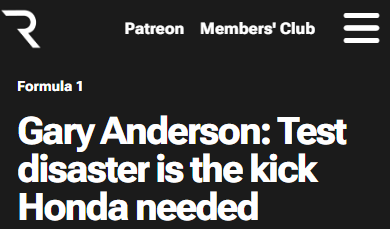
The headline was spot on for Discover: “Test disaster is the kick Honda needed”.
Firstly, this addresses the big news of the day (F1 fans know the season has not begun well for the Japanese manufacturer) and the use of ‘disaster’ is the right kind of wording to attract interest.
Without substance, this would be more of a clickbait headline, but here it was perfectly aligned with the content, the situation and the expertise – the article followed up on the promise, which is the key thing.
As Google Discover allows people to follow publishers, and will hopefully start pushing your favourites further into your feed, it’ll allow this kind of in-depth journalism to thrive over clickbait headlines.
Read more
Image from Unsplash / Karolina Grabowska www.kaboompics.com